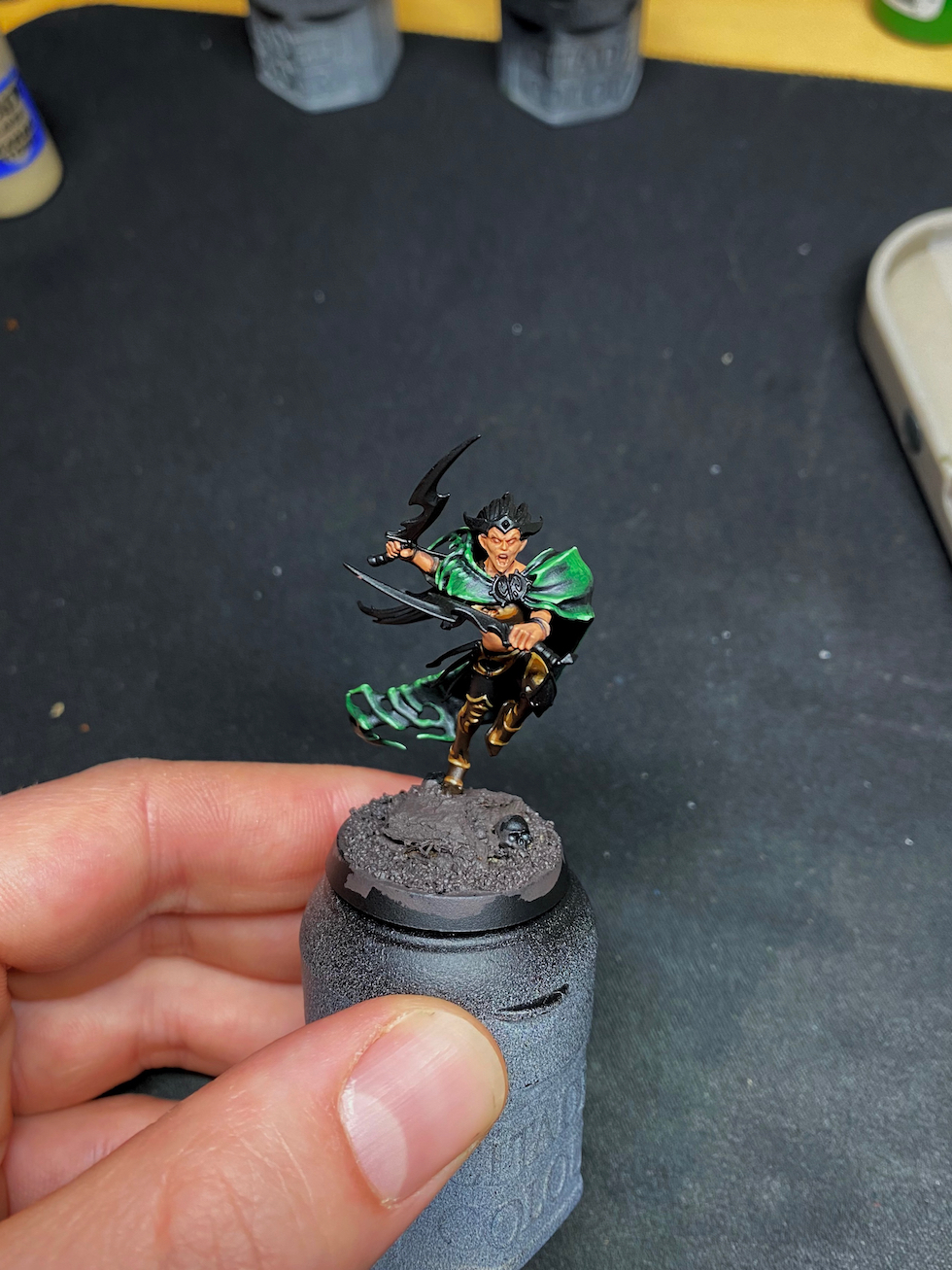
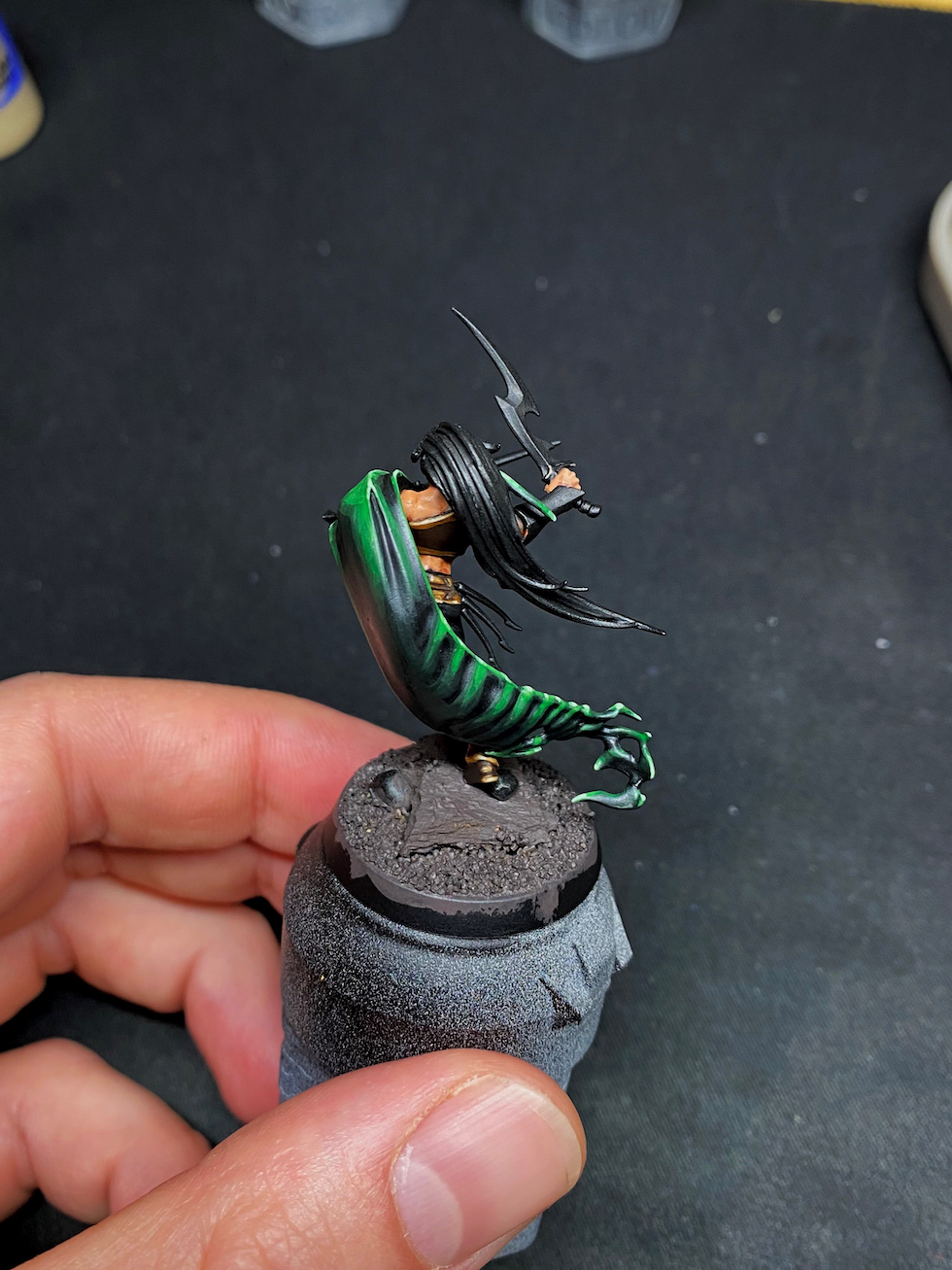
Since I want to use the Khainite Shadowstalkers as allies in my Cities of Sigmar Living City army, I decided to go with a kind of wool elf look. So far I like the direction I’m heading. I’ve finished the shadow cloak as well as the brown leather and started work on the skin.
Last saturday I played a game with my Cities of Sigmar against my brother and his Legion of Blood. I tried out the Tempest’s Eye city allegiance for a change of pace from my normal Living City. I lost badly. 😄
The -1 to hit aura of Neferata was a strong hit against my core of 20 Sisters of the Watch and also the 20 Wildwood Rangers. On top of that I didn’t manage to get all the Wildwood Rangers (2 damage against monsters) into combat against the Vampire Lord on Zombie Dragon which meant they weren’t able to kill him, which in turn left my right flank very open.
My left flank went okay with a big block of 10 Wild Riders charging forward, but in the end they didn’t have the damage output to really punch through.
Wir kennen es vermutlich alle, man geht ins Bett und bevor man das Licht ausmacht nimmt man nochmal kurz das Smartphone in die Hand und fängt an zu surfen, lesen oder schreiben. Irgendwann, oftmals viel später als eigentlich gedacht, legt man es beiseite und schläft. Am nächsten Morgen ist die erste Tat das Smartphone zu nehmen und das gleiche wieder von vorne zu beginnen.
Ich weiß schon lange, dass das nicht gut ist, ich merke es ja selbst. Ich wurde besser darin und habe es den ein oder anderen Tag vermieden oder bin zumindest nicht so lange dran geblieben. Aber jetzt ist gänzlich Schluss damit. Ich habe mir einen ganz simplen, digitalen Wecker gekauft, dessen Helligkeit verstellbar ist. Ich bin nämlich eine kleine empflindliche Blume.
Zwei Nächte habe ich jetzt ohne iPhone neben mir verbracht und es ist… befreiend? Ich lasse das iPhone abends im Bad, gehe ins Bett und liege einfach da. Ich habe Zeit und Ruhe um einfach nochmal ein bisschen nachzudenken bevor ich einschlafe. Ich empfinde wirklich ein richtiges Glücksgefühl von Freiheit. Das klingt krass es so zu schreiben, aber so hat es sich echt angefühlt.
Morgens bin ich die letzten zwei Tage dann sogar im Bad am iPhone vorbei gegangen und habe erstmal Frodo in den Garten gelassen, ihm Futter gegeben und mir einen Kaffee gemacht. Und erst dann habe ich das iPhone genommen und geschaut was ich so dringendes verpasst habe. Natürlich nichts. Also vielleicht bleibt es demnächst noch länger im Bad im Flugmodus liegen.
Alles an Marcels Erklärung und Argumentation kann ich zu 100% nachvollziehen, tue mich aber trotzdem immer wieder schwer damit es durchzuziehen, weil ich denke “aber ich müsste doch”.
Das geht mir mit der Sprach- und Themenwahl dieses Blogs so, aber auch mit anderen Themen wie der Qualität der Bemalung meiner Warhammer Figuren. Es fällt mir dort zum Beispiel schwer schlechter und schneller zu malen als ich es könnte und damit ein visuell schlechteres Ergebnis zu erzeugen als mir möglich ist – obwohl es mir vielleicht mehr Spaß bringt, weil es gut genug ist und der Prozess durch weniger Druck entspannter ist und das Fertigstellen von Projekten ein tolles Gefühl erzeugt.
Aber ich arbeite daran und so ein Artikel wie der oben verlinkte hilft mir dabei den Fokus auf mich und meine Freude zu lenken und nicht darauf was z.b. andere von mir oder meinen Kreationen denken oder was ich glaube, was die Welt von mir erwartet.
Früher™ war es ganz normal, dass alle Seiten, vor allem Blogs, RSS-Feeds angeboten haben und gefühlt auch jeder einen RSS Reader hatte mit dem er diese gelesen hat. Über die Jahre wurde das irgendwie alles weniger. Social Media und so. Ihr kennt das Spiel.
Die Theorie von RSS Feeds ist aber nach wie vor ziemlich gut. Ich kann Inhalte abonnieren, die ich mag und frei im Internet zugänglich sind und kann sie dann abrufen und konsumieren wenn es mir passt. Ganz ohne den anderen Kram drumherum und ohne in den Sog einer Timeline gezogen zu werden.
Das Problem der ganzen Sache ist eigentlich nur, dass viele Services gar keinen RSS Feed (mehr) anbieten oder er in manchen Fällen nur sehr schwer auffindbar ist. Bei deinem kann man sich allerdings mit RSS Box behelfen. Danke an Marcel für die Empfehlung. Diese kleine Webapp hilft dabei RSS Feeds auffindbar zu machen, wie z.b. bei YouTube oder Feeds zu erstellen wie z.b. bei Instagram. Die App ist frei nutzbar, aber Instagram Feeds funktionieren oft nicht, da der Service überladen ist. Glücklicherweise kann man die App relativ leicht selbst hosten. Das habe ich gemacht und jetzt klappt’s auch mit Instagram und Co prima.
Ich habe jetzt also Blogs/Webseiten, YouTube Channels, sowie Instagram und Twitter accounts in Feedbin, meinem RSS Reader. Dieser bietet außerdem noch die Möglichkeit Newsletter als Feed anzuzeigen, was ich ebenfalls sehr gerne nutze.
Insgesamt bin ich aktuell sehr zufrieden mit diesem Setup, weil es mir erlaubt weiterhin selektiv Inhalte von Social Media Plattformen zu konsumieren ohne auf den Plattformen in irgendwelche Timelines gesogen zu werden.
Selbst Inhalte erstellen ist natürlich nochmal ein anderes Thema. Von Twitter habe ich schon eine lange Weile abgesehen und meine Warhammer Instagram Posts verlagern sich auch allmählich hier in diesen Blog. 😊
Ich arbeite sehr gerne zu Hause, aber ein Problem ist, dass ich nicht automatisch aus dem Haus muss und es passieren kann, dass ich einfach tagelang nicht vor die Tür gehe.
Als ich im November aufs Land gezogen bin, hatte ich mir vorgenommen jeden Tag ein mal raus zu gehen. Natürlich hat das nicht geklappt. Bis jetzt.
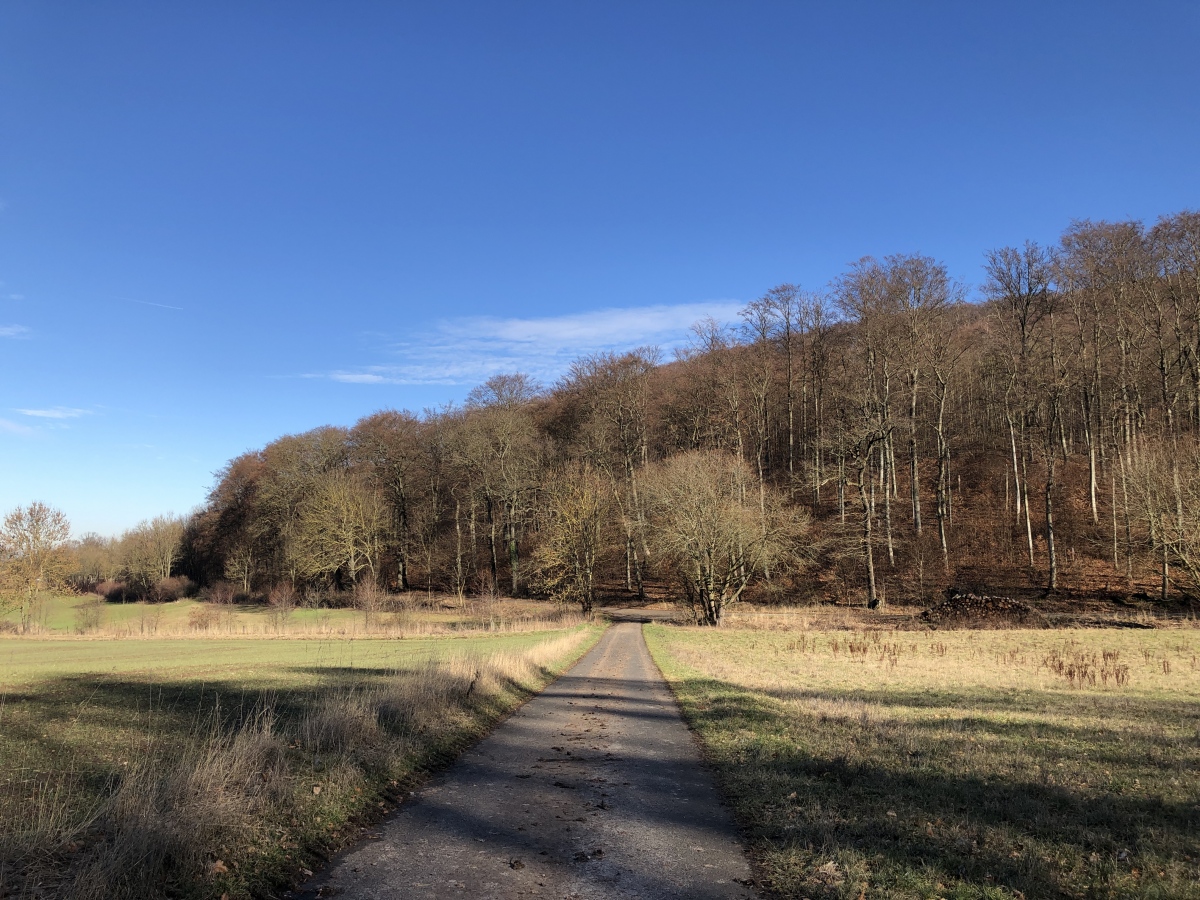
Seit ein paar Wochen gehe ich fast jeden Tag ein mal raus und mache einen Spaziergang in der Natur. Das tolle ist nämlich, dass ich zu Fuß in 5-10 Minuten mitten im Wald stehe. Und ich bin wirklich gerne im Wald. Schon als Kind hat es mich immer dahin gezogen und nicht ohne Grund sammel ich bei Warhammer Waldelfen und Sylvaneth (so eine Art Baummenschen und Waldgeister).
Das Wetter war teilweise nicht so toll und auch die frühe Dunkelheit hat es ein bisschen schwierig gemacht, aber letzte Woche war richtig schönes Wetter und hat einen Vorgeschmack auf den Frühling gegegeben.
Jeden Tag in die Natur raus zu gehen, und wenn es nur für 15-30 Minuten ist, ist die beste Veränderung für mein Wohlbefinden, die ich in letzter Zeit gemacht habe. Anfangs habe ich mich gefreut die Zeit zum Podcast hören zu nutzen, aber jetzt fange ich an, einfach die Stille (bis auf den Tinnitus) zu genießen und Vögeln und dem Wind zu lauschen. Und vorallem auch einfach mal die Gedanken schweifen zu lassen. Klingt vielleicht etwas doof, aber eigentlich ballert sonst in jeder Minute des Tages entweder was auf mich ein oder ich tue aktiv irgendwas.
Heute war das Wetter wieder so mittelmäßig, aber ich kann es kaum abwarten im Frühling größere Spaziergänge tiefer in den Wald zu unternehmen. Ich hoffe sehr, dass ich es schaffe mir die Zeit dafür zu nehmen.
Am 13. April, also schon vor fast genau einem Monat, habe ich den ersten Eintrag in meinem neuen alten Blog martinwolf.org geschrieben und damit visuelleGedanken.de (vorerst) still gelegt. Gerade erst ist mir aufgefallen, dass ich euch gar nicht von hier nach drüben umgeleitet habe. Das betrifft besonders diejenigen, die mir nicht auf Twitter folgen.
Wenn ihr weiterhin interessiert daran seid was ich mache, womit ich mich beschäftige und was ich fotografiere, dann schaut doch gern regelmäßig auf martinwolf.org vorbei oder abonniert am besten den RSS Feed. Ich würde mich freuen!
Als meine Entscheidung fest stand nach Berlin zu ziehen, habe ich auch entschlossen nach etlichen Jahren endlich mal wieder ein Fahrrad zu kaufen und damit möglichst überall hinzufahren – und auch gar kein BVG Jahresticket zu kaufen.
Mein Plan direkt am ersten Wochenende den Drahtesel zu besorgen hat nicht ganz geklappt, aber letzten Freitag war es dann endlich so weit. Ich war auf Empfehlung von Johannes bei Zweirad Stadler und habe dort einige Räder Probe gefahren. Ja, es gibt coolere, hippere Fahrradläden in Berlin, aber Stadler hat den Vorteil, dass sie alles mögliche haben und da ich noch keine Ahnung hatte was genau ich will, war das eine gute Wahl.
Am Ende wurde es ein BULLS Recreation Ground. Ich habe noch die Reifen gegen welche mit mehr Profil tauschen lassen und Lampen und Schloss dazu gekauft. Später noch eine Klingel – und ja, ein Helm kommt auch noch dazu.
Es hat zwei Räder, zwei Bremsen und einen Gang und ich bin super zufrieden damit. Ich bin die vergangene Woche trotz eisiger Minusgrade damit ins Büro gefahren und liebe es. So viel besser als U-/S-Bahn fahren. Mit einem AirPod im Ohr, der mir Ansagen macht, verfahre ich mich auch nur wenig.
Ich freue mich sehr auf den Frühling, da wird das sicher noch viel mehr Spaß machen und hoffe, dass ich dieses Fahrrad lange mein eigen nennen kann und es nicht geklaut wird.
Schon 2017 habe ich mich mit Minimalismus beschäftigt und mich sehr damit identifizieren können. Ich habe gemerkt, dass viele der Ideen und Prinzipien schon immer in mir gesteckt haben. Ich möchte mein Verständnis von Minimalismus aber noch weiter vertiefen und mein Verhalten noch grundsätzlicher verändern.
Ich, fotografiert von Jens Franke am 31. März 2017 in den Schweizer Bergen.
Ich wollte zuerst das Jahr 2018 als das „Jahr mit weniger“ betiteln, aber die Begrenzung auf das eine Jahr gefällt mir nicht. Ich möchte mein Leben dauerhaft weiter verändern und mich nicht nur für ein Jahr anders verhalten.
Statt immer mehr zu wollen, mehr Sport machen, mehr Gemüse essen, mehr Reisen, mehr Projekte machen, usw, möchte ich das anders angehen und mich auf „weniger“ konzentrieren und somit automatisch Raum schaffen für die wichtigen und positiven Dinge in meinem Leben.
Ich habe eine Liste mit Dingen gemacht, die ich weniger machen möchte oder von denen ich weniger in meinem Leben haben möchte. Diese Liste erhebt keinen Anspruch auf Vollständigkeit, ist aber ein guter Start und soll mir immer als Leitfaden helfen.
Es ist vollbracht! Ich habe diesen Blog auf einen neuen Server umgezogen und die Datenbank so umgebaut, dass ich nun endlich Emojis nutzen kann. Das war die Arbeit auf jedenfall wert. Freut euch auf sehr viele Emojis! ✌️